Start with the fabric, since it's older and stranger than the song. Suede takes its name from the French phrase gants de Suède — "gloves of Sweden" — after 18th-century Swedish tanners discovered that the soft, napped underside of a hide, usually considered the inferior, damaged half of the skin, could be sanded and buffed into something luxurious rather than discarded. French nobility imported the resulting gloves; the name stuck to the material itself, and by the 20th century it had spread from gloves into jackets, bags, and shoes.
The catch, structurally, never really went away: suede is made from the weaker, more porous side of the hide. It's softer and more pliable than standard grain leather, and also more absorbent, more easily stained, and far less resistant to water and everyday wear. A material French aristocrats chose for gloves that mostly stayed indoors turned out to be a strange choice for footwear meant to walk around outside — which is more or less the joke buried in the title "a fabric that never quite worked." It looked extraordinary and demanded to be treated like it might not survive contact with the ground.
The colour's more famous association didn't originate with Elvis Presley at all. In late 1955, on tour through the South with Elvis and Johnny Cash, Carl Perkins was told a story by Cash about a fellow soldier who took particular pride in his regulation black Army shoes, insisting to anyone nearby, "Don't step on 'em" — in his own mind, transformed into blue suede shoes for the night. Perkins turned the anecdote into a song, recorded it at Sun Records on December 19, 1955, and released it New Year's Day 1956. It became rock and roll's first single to chart simultaneously on the pop, country, and R&B charts — a first for any artist, let alone one who'd had no major hits before it.
Elvis recorded his own version soon after, worried enough about competing with Perkins's original that RCA held it back as a single while Perkins's take was still climbing the charts. Elvis's cover eventually became the more culturally dominant version — folded into his 1956 debut album, performed on national television multiple times, and reprised throughout his career — to the point that most people now credit him with the song, and by extension the colour, outright. Perkins wrote it, recorded it first, had the bigger chart hit with it, and is the reason blue suede shoes exist as a phrase at all.
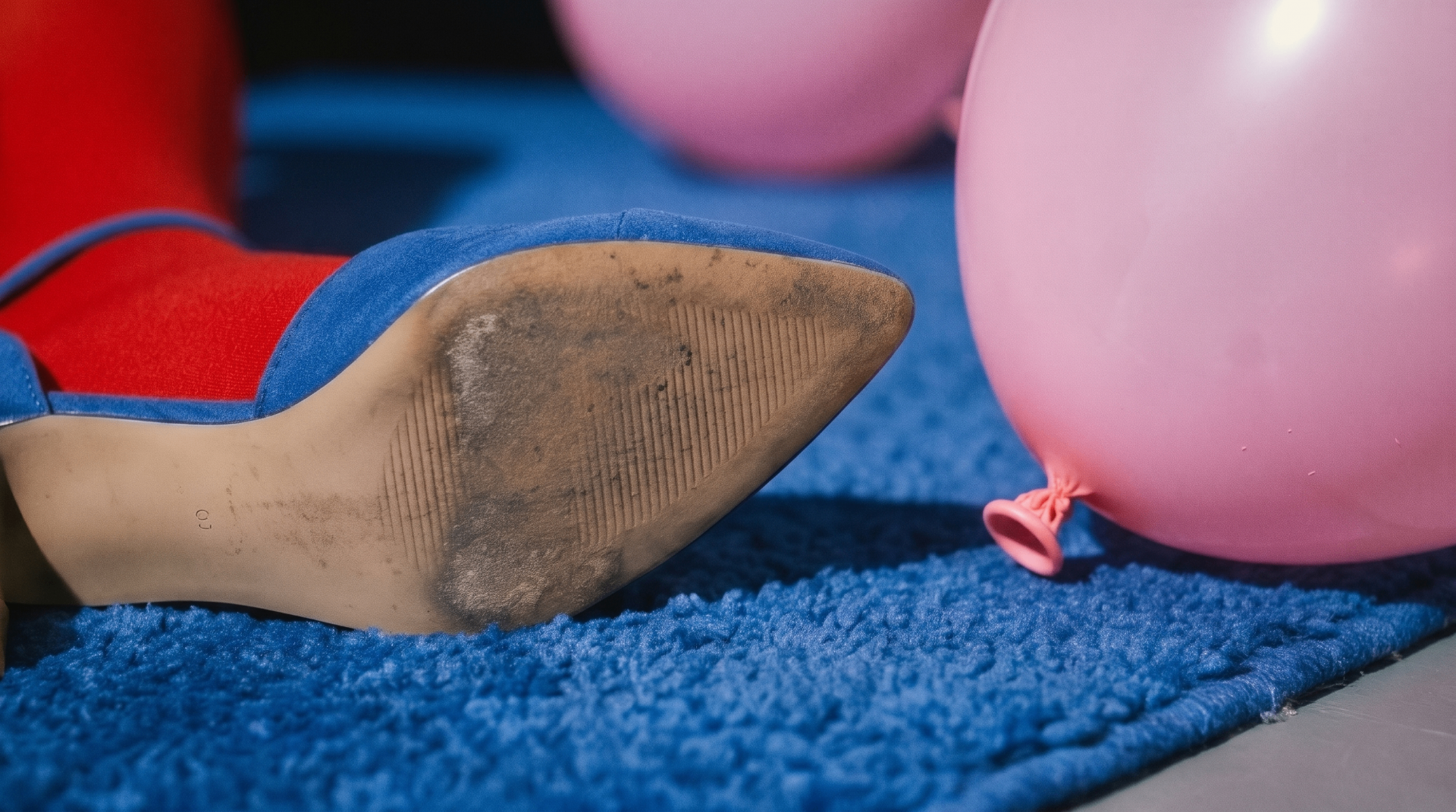
The shoes themselves never solved the fabric's basic problem. They remained, then and now, precisely what the title says: a genuinely impractical object, chosen because it looked like nothing else on the dance floor, not because anyone needed it.