The stacked white cake with pillars and piping wasn't always the default. Before the 19th century, English weddings ran on something else entirely: the bride's pie, a savoury dish of spiced meats, sweetbreads, and oysters that every guest was expected to eat a piece of, or a tower of small, plain buns called bride's biscuits, piled up on the table for the couple to attempt a kiss over without knocking the whole thing down. That precarious kiss-over-the-cake moment is thought to be the actual ancestor of the modern cake-cutting photo, not the cutting itself.
The white, multi-tiered version most people now think of as simply "wedding cake" has one clear origin point: February 10, 1840, the wedding of Queen Victoria to Prince Albert. Her cake weighed roughly 300 pounds, stood over a foot tall, ran nine feet in circumference, and was finished entirely in what's still called royal icing in its honour — pure white, made from refined sugar that was, at the time, expensive enough to double as a visible flex of wealth. It was topped with sugar-sculpted figures, including Britannia blessing the couple, and displayed publicly before the wedding, drawing crowds who came specifically to see it.
The colour mattered as much as the size. White icing required the finest, most expensive sugar available, so a fully white cake was doing the same social work as Victoria's white dress: broadcasting refinement and wealth to anyone looking. As sugar prices fell across the rest of the century, the style filtered down from royalty to the aspiring middle classes, who copied the tiered white cake at their own, smaller scale — and by the late 1800s, it had hardened from royal novelty into simple expectation. A wedding without one started to look like a wedding that couldn't afford one.
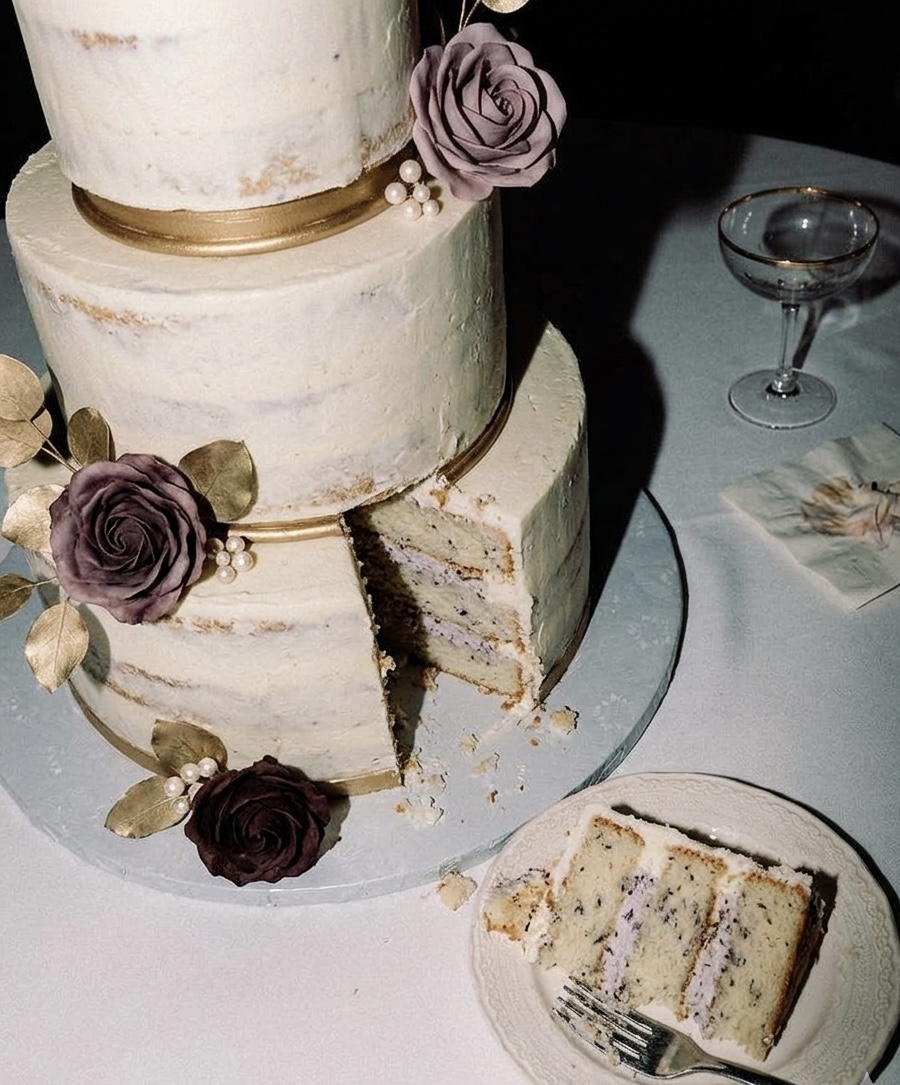
It stayed close to compulsory for well over a century. Even as recently as the 2020s, all-white tiered cakes were still being tracked as one of the season's dominant bridal trends. But the "and then it wasn't" part of this story is happening in real time: increasing numbers of couples are now skipping the traditional cake format entirely, swapping it for dessert tables, non-cake sweets, or simply nothing formal at all — not out of ignorance of the tradition, but as a direct, deliberate opt-out of exactly the expectation Victoria's cake created. A hundred and eighty-some years after one royal wedding made white and tiered mandatory, doing without it has become its own kind of statement.